
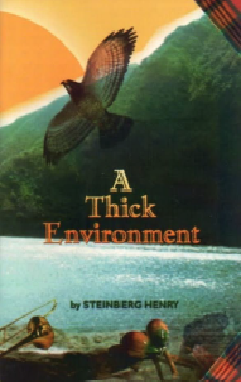
Beyond the Music: Steinberg Henry’s A Thick Environment Explores the Cultural Power and Possibilities of Dominica’s World Creole Music Festival
As Dominica prepares for another staging of its World Creole Music Festival, Steinberg Henry’s thought-provoking book, A Thick Environment, invites readers to look beyond the performances and economic returns to consider the festival’s deeper cultural significance, its impact on the creative industry, and its potential to shape the nation’s future.
When Dominica’s World Creole Music Festival (WCMF) emerged in 1997, it represented more than an opportunity to attract visitors, stimulate economic activity, and showcase musical talent. For Steinberg Henry, a Human Development & Learning Specialist, Communicologist and Documentarist, it was also a cultural
phenomenon with far-reaching possibilities, deserving of deeper analysis, meaningful media coverage, and a vision that extended well beyond the festival grounds.
Influenced by the festival itself and his master’s degree thesis, Language Music Struggle, Henry recognised the importance of positioning the WCMF as a distinctive cultural product. In 1999, he began making a deliberate effort to encourage a broader understanding of the festival, advocating for its recognition as an
instrument of cultural expression, identity, and creative development, rather than merely an annual economic undertaking.
His reflections and observations are captured in his book, A Thick Environment. It examines the festival during the period 1997 to 2001. Through its exploration of the event, its history, and its possibilities, Henry offers readers an opportunity to appreciate the WCMF from a perspective that challenges conventional approaches to cultural reporting.
At the heart of Henry’s work is a compelling message for media practitioners: “Reporting a cultural event should extend beyond announcing performers, describing performances, and documenting attendance figures”. He encourages a more deliberate and insightful approach to journalism; one that considers the event, the people behind it, the cultural environment from which it emerges, and the broader consequences of its existence.
For Henry, the World Creole Music Festival offered precisely this kind of opportunity. Its significance lay not only in the music performed on stage, but also in its potential to strengthen cultural identity, create opportunities for local talent, and position Dominica within a wider international creative landscape. Henry’s perspective was notably forward-looking. From the festival’s early years, he recognised its diverse cultural character and its potential to contribute to the development of Dominica’s creative industry.
He also anticipated the importance of sustained government support for culture and the creative sector. What may once have appeared to be an ambitious possibility has increasingly become part of Dominica’s development agenda. Under the Skerrit Administration, government support for culture and the creative
industries has been reflected in the promise to establish a Ministry responsible for this portfolio. This development underscores the growing recognition that culture and creativity deserve deliberate attention, institutional support, and a place in national development planning.
Viewed against this evolving landscape, A Thick Environment offers an interesting opportunity to revisit Henry’s early observations and consider their relevance to Dominica today. His work raises important questions about how a festival can become a catalyst for cultural preservation, creative enterprise, professional development, and international recognition. It also invites reflection on the responsibilities of policymakers, media practitioners, artistes, and cultural institutions in ensuring that the benefits of such an event extend beyond its annual staging.
On Friday, October 23, 2026, Dominica’s World Creole Music Festival will once again bring together artistes from across the globe, with Dominican creative talent taking centre stage. As audiences prepare to celebrate the music and cultural diversity that have helped define the festival, Henry’s work offers a timely
reminder of the broader significance of the occasion. The WCMF has become more than simply a gathering of performers and fans. It is an expression of cultural heritage, a platform for local, regional and international artistes, to showcase their creative possibilities in a small island nation to the wider world.
The continued development of the festival presents an opportunity to ask how Dominican music can be preserved, promoted, documented, and developed into sustainable prospects for the people who create it. It also highlights the need to ensure that the stories surrounding the festival are told with the depth, context,
and foresight they deserve.
A Thick Environment may not be the easiest read, but its insights into Dominican music, its musicians, and the wider cultural environment in which they operate, make it a worthwhile contribution to discussions about the island’s creative future. For readers interested in cultural development, journalism, music, national identity, and the evolution of Dominica’s creative industries, the book provides a perspective that deserves consideration. It challenges readers to look beyond the spectacle and examine the ideas, people, and options that give the festival its enduring significance.
Ultimately, Henry’s work reminds one that the true value of a cultural event cannot be measured by economic returns alone. Its lasting impact may also be found in the identities it reinforces, the talent it nurtures, the stories it preserves, and the instances it creates for future generations.
As Dominica prepares to welcome another World Creole Music Festival, A Thick Environment is a timely invitation to revisit the vision behind the event and reflect on how far that vision can still take the nation.
Steinberg Henry’s A Thick Environment is available at Jay’s Bookstore in Roseau, Dominica. Readers are encouraged to obtain a copy and explore the ideas behind one of the island’s most significant cultural events.
Sign in to comment
Signing in is optional. You are welcome to fill in the form below instead.