
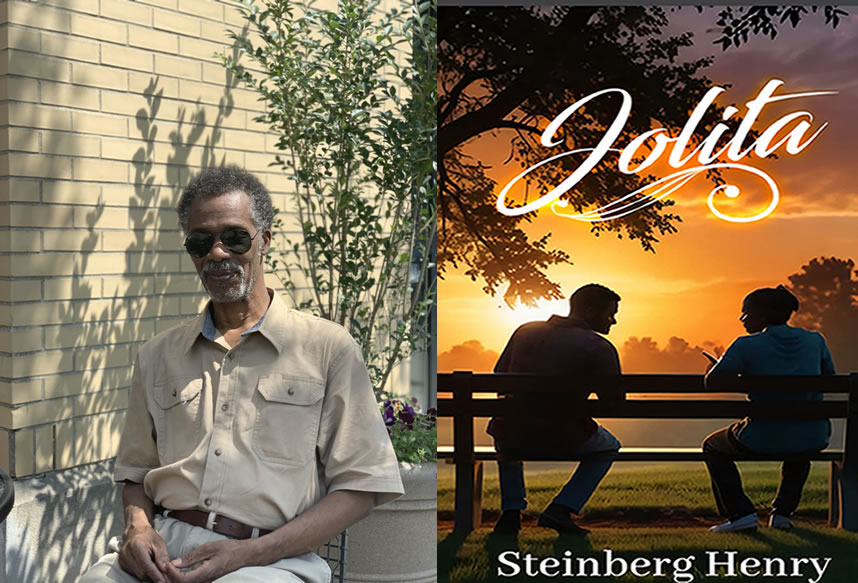
A Steinberg Henry Profile
Introduction
I’ve known Steinberg Henry for several years now, and we have only met physically once. But he’s a friend and a mentor; I suspect I never told him that part. By now we’ve had more conversations on the phone than I can count. Steinberg and I served a few panel discussions together, and Stein, as I and many others sometimes call him, always comes prepared to contribute meaningful insights to the conversation. Like many in and of my generation, Steinberg Henry was one of the most distinctive voices on the airwaves of Dominica, the nature isle via DBS Radio, the nation station. Like many of the announcers of that era, when Steinberg Henry was on the air, you knew it was him by the voice alone, that unique, cadence was his. But this piece isn’t about me, so, let us get into it…
Dr. Steinberg D Henry is a Human Development & Learning Specialist, a Communicologist/Documentarist, an Advocate for the Visually Impaired and Blind Venture: You’re More Than Your Eyes. He is also an Author.
Before these titles he was…
A boy on a boat’s deck off Philipsburg, reading with the lowered jib half folded around him, dasheen and plantain waiting to be sold on the wharf so the next semester of school could be paid for.
What follows draws on two conversations. The first is a written interview Henry gave to me, tracing his life from that boat’s deck forward. The second is a few questions from his conversation with Anthony Drigo host of This Week in Interview, on TDN Radio Caribbean, just over a year ago.
SAM: First, where did you grow up, who were your parents?
STEINBERG: I was born and grew up at Zicack, Portsmouth, Dominica. My Mother was Geest Industries accountant at Long House, Portsmouth, and my father village historian speaking French in Kokoy Country, Wesley, Dominica. As far as I am aware, they gave birth to an intelligence.
SAM: You have told me that as a boy you always loved language and communication. When did you realize or decide this was the field you were going to build your career around?
STEINBERG: My love for language, mind and biology must’ve begun in utero. But when I entered Radio at 22 and later began to get a sense of production and Radio’s ways of telling stories, I fell in love. There is too a philosophy and vast amounts of theory in Communication Studies and I revel in theorizing.
SAM: Talk about school. Was there a moment early on when you realised language was going to be your path?
STEINBERG: Keep in mind that though I felt inclined to language, I would not have known by 9 and so on. However, by ten I had won a northern district spelling competition and received a first prize: a hard-covered, orange-colored student’s companion! A few months before reaching 13, I entered Dominica Grammar School and left six years later. While there I came to love Literature, Languages and Biology as much as I did History. Years later, I would engage Molecular Genetics as an elective at Canada’s University of Windsor and, when I turned 63, (by that time classified as legally blind), I took up writing a PhD at Lesley University’s Department of Educational Studies: Human Development and Learning Specialization, steeped as it suggests in bio psychosocial phenomena. So, what took off with an interest in history, language and languages, is now the biological, psychological, and social with a passion for mind and consciousness studies. Then of course, my curiosity regarding the subject of imagination and imaginology studies has blossomed because of my research into visual impairments and phenomenology.
SAM: You said the sea shaped you as much as the classroom did. What was that time like?
STEINBERG: Those years between 13 and 20 were formative for me. From 15 while at high school, my mother sent me out to Sea whenever I had an extended holiday. Yes, I needed to see and know the Caribbean Sea and I had a brother-in-law who was from boat and sailing country: the Grenadines. Dowling DeCoteau was from Petite Martinique. Those days of sailing and selling produce up the northern Caribbean were also reading days on the deck in a partially folded jib when the day’s work was over. I had to sell the dasheen, plantain, tannias, yams and coconuts on the shore in Basseterre and the wharf in St. Martin if my next semesters were to be funded.
SAM: Do you think that time on the water still shows up in your writing?
STEINBERG: Oh yes. These traces in memory, traces bringing to mind island topography; water, water everywhere; porpoises leaping; language use differences and cultural sensibilities, would become seminal to my love for writing, literature, biology, and history. Imagination has been calling me long.
SAM: What did you do after high school ended?
STEINBERG: After high school ended in 1974, I flowed into teaching at St. John’s School, Portsmouth, Northern Dominica, Portsmouth Secondary School (1975) and, Savanne Paille Government School (1976). In June 1977, I left Savanne Paille for Radio. My Mother was pleased with the transition.
SAM: What were you reading in those years, and how did it feed into your work later on?
STEINBERG: I had been through the stages when I listened to my parents, followed and read prescribed books including The Social Contract by Jean Jacques Rousseau, William Shakespeare’s Complete Works which ignited my curiosity to find Plato’s Republic, part of Albert Speer’s Au Coeur du Troisieme Reich, Orlando Patterson’s The Sociology of Slavery, and others in that line of reading which I discovered in my Father’s shack and on my own. I discovered Thoreau and Nietzsche. I was reading every prominent West Indian writer of the time from George Lamming to V S Naipaul, Edward Brathwaite, Derek Walcott, John Hearne, Frantz Fanon, C L R James, Aime Cesaire and Walter Rodney. The Reggae, Calypso and Cadence-Lypso lyrics of the time were couched in the revolutionary and paradigmatic social context of Marxist-reading Black Power intellectuals, and Africa-consciousness Rastafarians, influencing my burgeoning mind and contributing years later to a Master’s thesis on language, song lyrics and social change. Out of this thesis would flow Calypso Drift (2014), Calypso Drift and Water (2020, 2026) and, Calypso Drift: The Wind (due in late 2026).
SAM: Your father sounds like he had his own curriculum for you.
STEINBERG: Sometimes I get the impression that my mother and he had a plan. As soon as I was out of high school, she sent me to look for him. He had left home from when I was about 4. On occasions I’d see him when I went to Wesley with my aunt with whom I would holiday at Calibishie. That was exceedingly rare. But when I left high school, I really went in search of him. As soon as we met my second phase of learning took off. Yes, I was working and fortunately exposed to another period of learning in my life, a sort of transition from high school to college to university. During those formative young adult years, as part of my second education, I was instructed by my Father, to read the Book of Hebrews as prerequisite to his teachings. I had to grasp the definition of Faith which would emerge in the first chapter of my PhD dissertation more than 40 years later by way of philosophers such as the German social theorist Jurgen Habermas. Moreover, my Father asked me to provide a definition of Mind which decades later informed my understanding of consciousness by way of psychoanalyst and psychiatrist Carl Gustav Jung, Martiniquan psychiatrist Frantz Fanon and Transcendental Meditation master Lebanese Tony Nader. The definitions of Faith and Mind informed my PhD methodology. It is written that structure is emergent and this is so true!
SAM: You lived through the 1977 strike in Dominica. What role did you play in that?
STEINBERG: It’s amazing too how memory serves. In 1977, I was the poet during Dominica’s 47-day strike. That was three years after having left Dominica Grammar School where Alwin Bully had told me that I could write. The 47-day strike was militant at times and I participated fully in that social uprising with an actual spotlight on me on stage at Dominica’s Goodwill Parish Hall. The microphone was clean; every breath accompanied each word’s sibilance!
SAM: How did you get into broadcasting?
STEINBERG: 1977 too was the year I entered broadcasting through the kind support and guidance of DBS general manager Dennis Joseph. From those days in broadcasting creativity, the rest is history as we say in Dominica. I would attend Codrington College in Barbados from January 1980 to June 1980. This was organized for journalists in the Caribbean and was to run for 6 months. It was a theological college hosting journalists of the Caribbean with professors and teachers drawn from the University of the West Indies, Cave Hill, Barbados. The 6-month project was being sponsored by Caribbean Conference of Churches and Caribbean Tourism Organisation. The Principal of Codrington College at that time was from Sierra Leone.
SAM: The years after that cover a lot of ground, marriage, government, broadcasting, moving abroad. Can you walk me through it?
STEINBERG: Forever on the move, the journey seems swift on hindsight: married Jeanne in 1981; our daughter was born in 1982; attended Caribbean Institute of Mass Communication (1983-84); Press Secretary, Government of Dominica (1984, 1986); visit to Taiwan (1986); return to Radio (1986); my Father dies (1986); travel to international education conference in Nairobi, Kenya with Dora Joseph, Dominica’s Chief Adult Education Officer (1986); our son is born (1987); leave Dominica to attend school in Ontario, Canada (1987); my eyes began to give trouble (1988); worked with CBC Radio Canada, Windsor (1989); moved to York University to begin a PhD in Sociology, after having received a BA(Hons) and MA from University of Windsor in Media Policy and Communication and Social Justice respectively (1991); took a break from York and never returned (1993); taught sociology at Dominica’s Sixth Form Community College (1993-94); managed PR, Registration and Information at Dominica Social Security (1994); managed PR and Marketing at Roseau Credit Union (1997-1999); produced television documentaries on child sexual abuse and Early Childhood Education on behalf of UNICEF and Christian Children Fund (1995-2002); along with my family moved out of Dominica for New York (2002); by then my eyes were beginning to blur and fog.
SAM: What was working at DBS like, especially when you found out listeners appreciated your work on the air?
STEINBERG: It was a serious place. I made my fair share of errors reading news and announcements. When I entered broadcasting in 1977 it was especially important to read well, to read correctly. I was encouraged because really, I loved learning and I was a bookworm and radio needs bookworms if it is to broadcast meaningfully. I was encouraged by Dennis Joseph who was the General Manager who hired me. He did not hesitate after our conversation/interview.
Three years after entering Radio, I attended a six-month training at Codrington College, Barbados. That awakened my intellectual interest given what my father and Mother had planted. By 1983 I was off to Jamaica for one month and then one year to begin my work in Radio Production at what was then Caribbean Institute of Mass Communication (CARIMAC). This is when I believe communication and media in particular took my heart. It was there too at CARIMAC that I read some of the most critical literature in media theory, political science, sociology and more. At Mona, I discovered too that I love using sound, voice, and text to tell stories by Radio. I would later learn techniques working with images in Television from Royette Greenaway, one of Dominica’s best framers of film. When the image emerged in my work I was thrilled, discovering in the process my imagination and love for images.
At DBS and later, When I became aware that my work was being appreciated I sought to do it better and better. If you don’t mind me saying this: I was excellent on air! I spoke well and I was well-read!
I still remember when I produced the documentary “Waves of Soil” touching the Bagatelle Disaster of 1977. I applied all that I had learned in theory and practice in the production of those documentaries that would follow on behalf of Christian Children Fund. I could do thousands of things with text, voice and sound and I could write. Then I learned to add images and the rest was heaven. I felt like I was in a learning zone.
In 1987, I would receive a scholarship to the University of Windsor, Ontario, Canada which was a school twinned with the University of the West Indies Caribbean Institute of Mass Communication then. It is now the Caribbean Institute of Media and Communication. This shift is a huge discourse in communication studies, but few care to talk or theorize these anymore.
At Canada’s CBC Windsor, I would work as an assistant producer, producing long interviews, editing them for precision and sophistication.
I was disappointed that I could not get into Radio in New York when I arrived there in 2002, but at that time I was dealing with my changing visual condition.
SAM: What was New York like for you, especially with your sight starting to change?
STEINBERG: In New York, I still had some sight. I frequented State University of New York’s department of sociology where I knew an Israeli professor. New York offered an excellent opportunity for understanding ophthalmology and Optometry, Vision Sciences, and alternative ways of treating and healing eye disorders.
SAM: How did you learn to navigate day to day once your sight had gone?
STEINBERG: Gone meaning diminished. With the sight I had, I could reach New York’s disability institutions, and they linked me into a few places. I attended New York’s Catholic Guild where I learned how to type as a secretary. I learned how to navigate using a cane; I was asked to carry one because with one anyone knocking me with a vehicle would be wrong. If I ran into someone, they were more than likely to forgive me. I did not quarrel. I took the cane.
SAM: You lost your mother during this period too.
STEINBERG: While going through these changes in New York my mother died in 2003. I travelled to Dominica mourning her passing and gathering more structure and imagination for completing As She Returns Now. As She Returns Now was my effort at coming to terms with our sight loss. Then off course, she had told me so many things about eyes and the dominant blindness paradigm. One of these was classic: forget about the gene thing!
SAM: What brought you to Georgia?
STEINBERG: On returning to New York, I produced a bit of television with Morrison Thomas and crew and held a short stint with the Rockaway Action Center. At one point in 2005, my wife and son moved to Georgia, and I moved to the Bronx being hosted by Lucia John of Transcendental Meditation fame. At the time I was trying to get involved with Medgar Evers College, but that did not work. I moved to Georgia to meet my family.
SAM: Once you were in Georgia, is that where the writing really took hold?
STEINBERG: Yes, after three years in New York where I began writing As She Returns and, Calypso Drift, we were all in Georgia. Our daughter was at Bernau University pursuing a master’s degree in occupational therapy and our son was just out of high school.
SAM: What happened with the job at Georgia State, and how did that lead to a shift in how you spent your time?
STEINBERG: I took to writing in Georgia and did a stint at Georgia State University’s department of Disability Services through support from Georgia Vocational Rehabilitation Agency. I would leave Georgia State after a near traffic incident while on my way to work. My eyes were troubling. My daughter and son asked me to stay home until I was ready to do otherwise. While at home I rewrote As She Returns renaming it As She Returns Now. I would travel to Vancouver, British Columbia to find acupunctural treatments for my eyes while working on An Unassuming Love. That was launched in 2011 to be followed by Calypso Drift in 2014. Then one day in 2017, I told my daughter I needed to transform this visual experience into a study. She concurred.
SAM: What set the PhD in motion?
STEINBERG: A good hunger that never seems to leave me. I had already told my daughter about my intention. I had to set that in motion. I received additional computer training support from Georgia Vocational Rehabilitation Agency and, Atlanta’s Center for the Visually Impaired and applied to Lesley University, Cambridge, Massachusetts. While at home too in Stone Mountain, Georgia, I had taken up providing reading and editing the works of students at various universities. While this paid, I was also introduced to students from Bosnia, Lithuania, Turkey, and Africa. My friend from Sierra Leone had been writing a PhD in Adult Learning at Lesley University and had been sending her pieces for me to read over. At the end of our learning together she told me I should do the PhD because I write well.
SAM: Doing a doctoral program while blind must have meant learning a whole second set of skills before the coursework even started.
STEINBERG: Yes. In quick time I was asking Georgia Vocational Rehabilitation to extend my training because if I were to go into this PhD I would have to fill out many forms and learn navigation flows and I was not trained to do these with eyes closed, dark or foggy.
SAM: Who helped you get there?
STEINBERG: Georgia Vocational Rehab provided a technology assistant originally from Andhra Pradesh, India. She who had been living in the US from her days as a teenager, attended Kennesaw State University in Georgia. Brilliant to the core and certified as a Jaws Screen Reader expert, she guided me through processes of navigation from institutions web pages, government forms to Blackboard. Blackboard is the online learning platform used by colleges and universities primarily. Courses, discussions, grades, and more are posted there. And I was learning through hearing, that is why I used the Jaws screen reader which reads text for me. This is a separate conversation: screen readers and learning. Additionally, I received significant financial support from the Federal government given the visual disability.
SAM: What was it actually like traveling to Massachusetts and starting the program?
STEINBERG: Well, the emotional separation from my wife and daughter. Our son had taken up work in Jacksonville, Florida. That was something for my wife and daughter. They cried as my wheelchair moved on.
If I had to go to Cambridge, Massachusetts, I was going to have to take a wheelchair at Hartsfield-Jackson International. My sight was foggy and I had no idea of the geography of the space. Hartsfield is huge and one of the world’s busiest airports. There is so much to be written about travelling and the blind.
I got to Cambridge anyway. My student friend from Sierra Leone hosted me. Lesley University appointed a young man, Kolin Perry to guide me by walking with me. I simply place the fingers of my left hand on his right shoulder, my cane in my right hand. We entered the classroom and I believe everyone wondered at the time how was he going to do it if he did not see. We’re going to have to deal with this blind guy to the end. And I stayed to the end, graduating in May 2023 with a PhD in Educational Studies: Human Development & Learning Specialization.
SAM: What was your dissertation about, and what did you actually find?
STEINBERG: My dissertation is titled “Active Imagination, Wellbeing and Ways of Seeing: A Phenomenological Inquiry into Experiences of Adult Learners with Visual Impairments.” Lesley University published it on Google Scholar!
The Abstract read: “Six female and two male adult learners who became blind between the ages of 20 and 75 years participated in this study conducted by a blind researcher. The purposely sampled eight were interviewed virtually by way of Zoom. In combination with Johnny Saldana’s work on codes, this study used the NVivo framework for determining structuring categories, selecting node themes, code frameworks, and final codes from the first interview. 291 codes were clustered under 26 node themes. NVivo’s word frequency search and Word Tree were applied to clarify and lend a number value to participants’ codes. The second interview, administered after participants had listened and read the first, was treated to the psychological features inherent in interpretive phenomenological analysis, and the relational research tendencies drawn from Carol Gilligan and Jessica Eddy which granted participatory voice to the marginalized, their wellbeing and ways of seeing.
The expert group through their codes, provided answers to three research questions: (i) what value do adult learners with visual impairment say they place on using their active imaginations; (ii) what are the various imagination experiences adult learners with visual impairments report they encounter; and (iii) what do adult learners with visual impairments believe are the factors and conditions that promote and hinder the use of their imagination and active imaginations. The blind experts reported that active imagination permeated and enhanced their memory, that is, remembering; their visualizing and picturing, and energized the use of their other senses as they created in, and navigate personal and public spaces. Imagination experiences ranged from depression to strengthening of faith, the discovery of value in caretakers to final acceptance and wholeness. The factors and conditions that hindered or promoted were spread across their 291 codes and significantly identified changing their impressions of themselves as the point of entrance to their healing and psychological wellbeing.”
SAM: Where do things stand with your writing now?
STEINBERG: While doing that PhD, I cleaned up and published Calypso Drift and Water for the first time in 2020. That beautiful book would be published again in 2026. I also republished As She Returns Now in 2021. Jolita was set in motion on March 25, 2015, and would be finally published in 2025! There is a body of literature, I’d like to clear up. There’s a collection of stories still to be published, and even now traces of that new field and language emerging through that dissertation and a doctoral experience have begun to slip effortlessly into the present.
SAM: Over the years, you’ve met and worked with a multitude of people, of all these folks is there anyone who stands out the most, you know, someone who you would say if it were not for them, you might have not reached a certain goal, or maybe just a mentor?
STEINBERG: It’s never a fair question. So many came to my support. Where do I place my father’s intervention just at the time when I was reaching maturity as an adolescent. What do I say about my mother who carried me! I think overall my life has been constituted by a multiplicity of learnings and experiences being taught. In effect, nearly everyone I met in my life shoed me something. It would be long recalling names and even as I think of this, images of so many persons flood my mind, and I do not want to not mention anyone.
SAM: Without getting too deep, what is your take on faith, religion, and spirituality? I ask this because I have the perception that us fellas don’t really talk about our personal beliefs; you know what truly drives us. Pastors, priests, and prophets and the like excluded of course. How does Stein… Dr. Steinberg Henry view those aspects of life? Especially coming from someone who has studied the human condition for as long as you have. Yes, it’s a loaded question, I know.
STEINBERG: I am a man of Faith. I am of that line of Abraham, Isacc and Jacob and the Lion of the Tribe of Judah. I love Jesus Christ, the Anointed One. I find wisdom likewise in Buddhist thought, in Ayurveda and, I find laws in Islam and within Rastafari instructive. I grew up Methodist, attended Roman Catholic churches, Baptist Churches, Seventh Day Adventists gatherings, the Anglican Church, sat in silence in Temples and have held a meditation practice for the last 30 years. Dr. Jean Houston, one of the principal founders of the human potential movement deepens and unifies the matter, reminding us all that we are in the universe, and the universe is in us. Essentially, it is still a beautiful world and my body identifies me. What is this body? What’s inside it? How old is what’s inside it, what’s within? Does its age matter to our thinking now? Can we reach it at will? Have we practiced these as part of our socialization? The answer is no and I believe if there is any time in which we should be teaching finding what is within us and the potential it offers, that time is now! As for the human condition: I am baffled to think that human beings still go to war!
SAM: What is next for you?
STEINBERG: I’ve just begun to give shape to my “You’re More Than Your Eyes” project. But I suspect that in order to find a place in academia I must publish a research paper with its epistemology, ontology and methodology made clear, not with the literary patterns in which I dress research. Yes, but the You’re More Than Your Eyes’ project will be heard about more and more as the months proceed.
Two gentlemen, Dr Rodney Pennamon (University of Southern New Hampshire), and Dr. David Sarnoff (Capella University) decided to not let my dissertation stay on the shelf (as most do, they said). I was pleased to know they found mine active! . We decided to produce an audio book on the subject central in my dissertation and that is Carl Jung’s concept of active imagination. If you are acquainted or familiar with the literature from Jung, a one-time student of Sigmund Freud, this is huge! David is a flutist of 50 years, and Omkar Naderi plays the harp, producing sounds of India’s tablas and sitar on this audio book. Dominica’s Tyrella Alexander narrates wonderfully, while I appear a few times with a few meditations designed to activate the imagination. Even children can learn to visualize through exercises appearing in our audio book. Visualizing forms such an integral part of imagination and learning.
Jolita!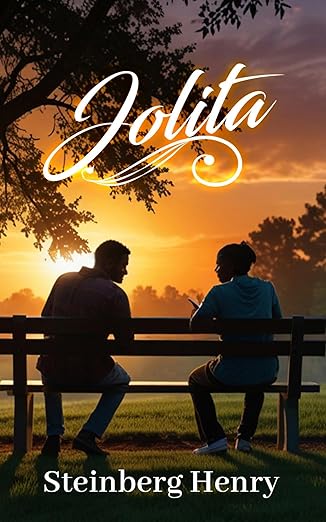
That’s an interesting name and book title. As I mentioned at the beginning of this piece Dr. Henry sat down a few months ago and spoke with my colleague and host of TDN Radio’s This Week in Interview Anthony Drigo, to discuss his book, “Jolita” not long after it was published. Dr. Henry had been on the program many times before, discussing Calypso Drift, Calypso Drift and Water, and other topics of interest. But this was the first time Anthony could introduce him as Doctor Henry. Here’s part of that conversation.
ANTHONY: Who is Jolita? What is Jolita? For now, we know it’s the title of your latest book.
STEINBERG: Jolita is an intelligent woman. As the book says, she’s 26, and the person she communicates with is named Stein, and he is 60. I described her as a Creole writer woman, because she embodies the totality of care, friendship, love, the capacity for reflection on history, sense of culture, matters culinary, style. She has a love for children and for older persons. And she surely has a love and a concern for a man who’s visually impaired, as I am.
ANTHONY: Walk me through how the book is actually put together.
STEINBERG: We have all the … they are letters. So, we have Jolita first writes me a letter. There’s a date and at the top of each letter there’s a lovely fruit, and that adds a certain colour to the text inside, and there’s the name of the person who writes. There are days you would notice that there are two or three communications in the day because things are getting tight, but you know, you can see the rapidity, and sometimes you can see the great delay, towards the end, as the communication lessens between Jolita in Dominica and Stein in Georgia. The book itself is beautiful in design. The cover is lovely. It presents two persons sitting down face to face on a bench, each have something to write. It was in part designed by my Dominican friend Nadine Edmund, who lives in Arkansas, and in the background some trees.
ANTHONY: Is Jolita fiction, or is this real? People clearly want to know.
STEINBERG: I think the fascination with the book and the continued experience of the book is not to have those questions answered, and to have the reader attempt to answer those questions themselves. And maybe on the second read, is the answer the same as it was the first time you read it? I think that Jolita exists and, somebody says no, no, no, this must be from the author’s imagination.
ANTHONY: So, it’s like somebody looking at the Mona Lisa and having all kinds of questions of the Mona Lisa, but the artist is no longer alive for you to ask those questions. So, you have to find your answers yourself.
How do you keep the relationship in the book from tipping into something explicit?
STEINBERG: Because of the mutual respect that the two people share for each other, the text is not allowed to slip into anything like undressing, but it remains very passionate and emotional throughout. One of the things I appreciate about the Mighty Sparrow as a Caribbean icon of tremendous capacity and ability is that he wrote “Capitalism Gone Mad.” He wrote “Slave.” He wrote “Education Is the Key,” and sang “man Will Survive” (rather philosophically). And yet, he still wrote “Saltfish.” So I think what the artist (and I am an artist first, (was drawn to was the matter of how do I balance this with a bit of erotica and philosophy, but not drop it into sexuality, and at the same time write something that is sassy and nice to keep the reader thrilled, and at the same time tell them that there’s a philosophical outlook to all of this.
ANTHONY: Is there a passage that’s stayed with you more than the others?
STEINBERG: Let me see. She writes a note. “Hello, good morning, I’m looking for a friend. He goes by the name of Steinberg Henry, but I call him Stein. Have you seen him? Do you know him? Could you tell him that I asked about him? He’s a really nice guy if you get to know him, highly intelligent, bubbly personality. The best friend anyone could ever ask for. How are you, my dear? I know it has been a while. I am here and I am great. How is the family doing? Tell me about the little ones. Most importantly, how is the healing going?”
I remembered I wrote to her telling her that a woman told me it is because of my sin why I had difficulties with my sight. And she wrote back and said how could she dare say that? If in that case, all of us would be sinners, all of us would be blind, since the first cloud raised up. And she was so angry about this woman who told me that. And here was this young woman saying, why didn’t she take the time to pray with you to restore your sight?
ANTHONY: Where did the name Jolita come from?Steinberg: Jolita actually emerged. There was a writer called Vladimir Nabokov, and I remember many years ago, probably when I was 26 or 27, I read a book called Lolita. And when I read that, and in writing this, I thought, how am I going to call it, and then of course the “J” came up. Whatever the inspiration that got that name, it’s perfect, I think.
ANTHONY: How does the book end?
STEINBERG: There had to be an epilogue where after all this had been written, I said write something at the end of the document that summarizes all that has been written. So, Stein writes his piece, and then Jolita writes her piece. The work ends with a poem.
Jolita wrote: “How can a grown man so distant be so close and have such an impact on a youthful life like mine. Only through our conversations will you be able to answer that.
“There is a beauty in the unseen; it opens up your eyes from deep within.” Truly this man was one who had a great passion for beauty. It is normally said that ‘beauty is in the eyes of the beholder’ but I must warn you that this beauty I speak of is so much more than the beauty of the eye. He showed me things I never knew existed within me.
“The way these conversations wrapped and unfolded the true nature of us both, from the surface of our hearts to the dept of our souls! The passion that we shared was not tamable. I am not talking about a walk on the street acquaintance — his logical way of thinking could have any intelligent person on a quest for truth and belonging. I thank God every time I think of him!”
As for that poem, it read: February 14, 2022
In A Green Night Dawning
Didn’t feel it
didn’t feel like it
didn’t know him anyway
what if he were just another
wanting to
wanting to
truth is I wanted too
imagined too, two bodies soaked in rain now
basking in fire
dripping from a white river
warmed in steam of another water
this one not from him
this one from a lake boiling
in and behind this navel
cut so deep
could not let mama know even see the desire
even as I dreamed it, drank it, sucked it along
interiors in my tongue, heart
and yes, through each thread in breath
itself deeper emptying
deeper
come to see me my love
gaze on moon on my pelvis
many moons
even the one that is thick and dark
telling tales of secrets
in hard trees, hard stones
water-producers
come to see, drink my tenderness my love
I’ve asked and you have
not responded to the longing
this fecund space set out
like a forest bed for our kissing tongues
on which all creatures love
damp in eco’s heat
Is it wrong to think these too
to dress them in pretences or sighs of shyness
chuckles followed by a turn of the tongue
fingers pointing to a gentle need
hidden to this day
this archaeology of desire
we must unearth.
the day comes
your slender, lean form
melted into my warmth
its long historic baths
positioned along corners
touching gentler banks each time
plucking fruity points
each so sweet
yet sweet is not here the word
as breath deepens into central heights upward
as you enter deeper and deeper into that night
of remembrances
full like moons
my thick dark lovely self
so ancient
discovered now
in throes of ecstasy
as we burst into laughter.
there is another thread
to this meeting
no it was not Venus and Mars
was beyond male and female
and beyond
and yes
we both looked
as it flowed out of bodies lifting
I can hear religious screaming
sinner!
it rains, thunders that evening
as tenderness intensified
across thick frontiers of knowing
how joyful
how joyful we were
in the world’s most salubrious setting
in a green night dawning!
Click here to watch the full episode on our YouTube Channel.
SAM: Before I return to asking Dr. Henry my final few questions, I just want to say that I’m a firm believer in giving folks their recognition before we lose them forever. It makes no sense to me to give a person flowers after they have left this world, because they can no longer enjoy it. I don’t mean worshipping another human being, don’t get me wrong. What I mean is we ought to show people we appreciate their work, while they’re still able to appreciate our appreciation of them.
SAM: I’ve read Jolita, Calypso Drift, Calypso Drift and Water, these in my opinion should form part of some schools’ required reading, especially Caribbean schools, have you reached out to any school, or better yet has anyone reached out to you? Wanting to include your work in their literary studies?
STEINBERG: No, not yet. I heard that a publication was released in 2020 presenting Dominican writers. I think the only missing name was Steinberg
Henry. Over the last five or so years, I’ve stopped thinking about selling and being featured and took to focusing more on writing. With the advent of
education in entertainment and entertainment in education, there will be need for my sort of literary treatment of popular cultural expressions as song
lyrics and their context. This is becoming a way of doing history, then of course, I root my work in what I refer to as an eco logic. I am hoping that the concept will be soon opened up by a set of astute youth and scholars.
SAM: Well, it’s an unfortunate shame that not even the Dominica Calypso Association has made Calypso Drift part of their Calypso House library, (If they even have one, then again, maybe I’m too ambitious). Anything else you want people to understand about where all of this is heading?
STEINBERG: In my works, the Calypso series find their roots in that master’s thesis; I feel the PhD ideas and thoughts trickling gently in and, to be honest, I am not in a hurry. I am confident: daily I read features of my work as they emerge from others’ thoughts and practices informing a whole person. My story is of value, abundant in mind-body experiences, and full of spirit. Disability advocacy continues. I have begun teaching the blind or visually impaired how to search within rather than succumb to stress and depression. I’d love to guide children as they write. I love producing elder stories, stories of the unrecognized and forgotten. I love finding victories of our peoples of African descent in Dominica and the Caribbean and bring them to life as my dear friend and writer Catherine Dorsette does with the texts and histories of Montserrat. All aspects of Radio still thrill me. But I am thrilled about having conversations with students. I’d love to teach critical thinking, communication to those who practice care for the human body, teachers who teach the blind, students in search of methodological practices, media practitioners, and broadcast journalists in search of meaning and content. Do I have to see you to guide you to learning? Are your eyes the only way to learning and seeing? While we search for a cure in ophthalmology, optometry, and vision sciences, I suggest that a blind person who does not see outside has a gift inside. It is this unfolding of that which is Within which has caught my attention.
SAM: Where can anyone looking for your books find them, for purchase?
STEINBERG: At present, they are still on amazon.com. But a wonderful team of persons are coming together to ensure the flourishing of the writings of Steinberg Henry. So, there’s work to be done in marketing using AI. No apologies. The rest of my work flows from my Breath, Blood, Heart, Mind, Soul and Spirit and I give thanks for that!
Thank You Dr. Henry for talking with us so openly.
This in a knot shell is Dr. Steinberg Henry, but this piece in no way captures the whole person. I hope you enjoy reading this profile of a Dominican who we can all say has made his contribution to the nature isle in the best ways he knew how. And despite the physical challenges he has not given up or waved in his principles to serve the island that raised him from a boy to a man helping pave his way to a PhD!
Sign in to comment
Signing in is optional. You are welcome to fill in the form below instead.